Prinda loves flowers. What girl doesn’t? If it were possible to surround herself with 1,000 lilies every day, she would do it. She loves colorful blooms, too; for her, the brighter the colors, the better—except for lilies, which are always the best. She also loves gardening. She spends hours digging the soil, planting, and pulling weeds. To my untrained eye, I can’t tell whether the result looks any better, but she seems satisfied with it, and that’s fine with me. Soil, bugs, and sticky weather have never been my thing.
The only problem is that she can’t seem to make the plants bloom with colorful flowers. Our plants prosper, true, but there are only leaves, no flowers. In the end, I told her to just get a beautiful pot of petunias and replace it every six months or so.
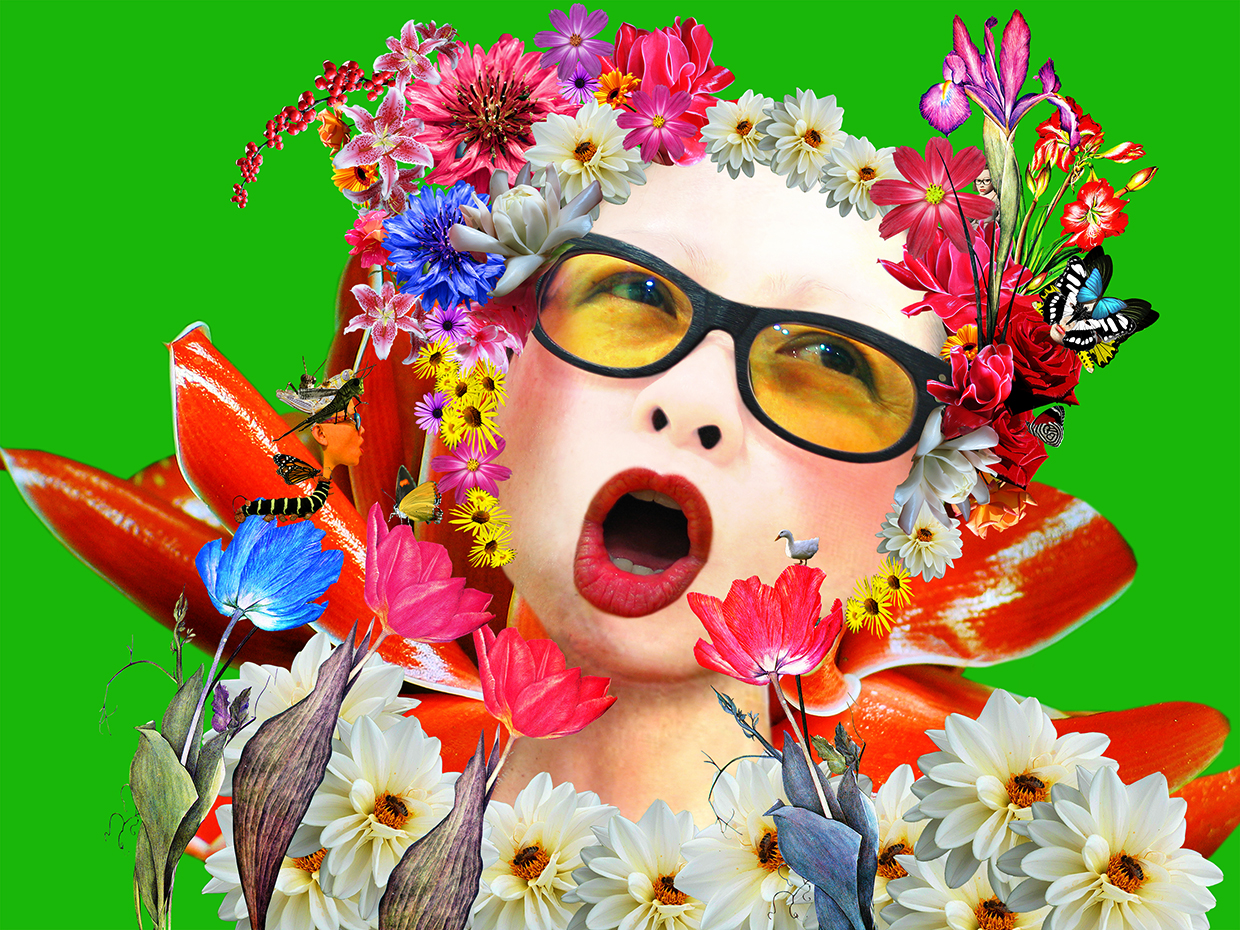
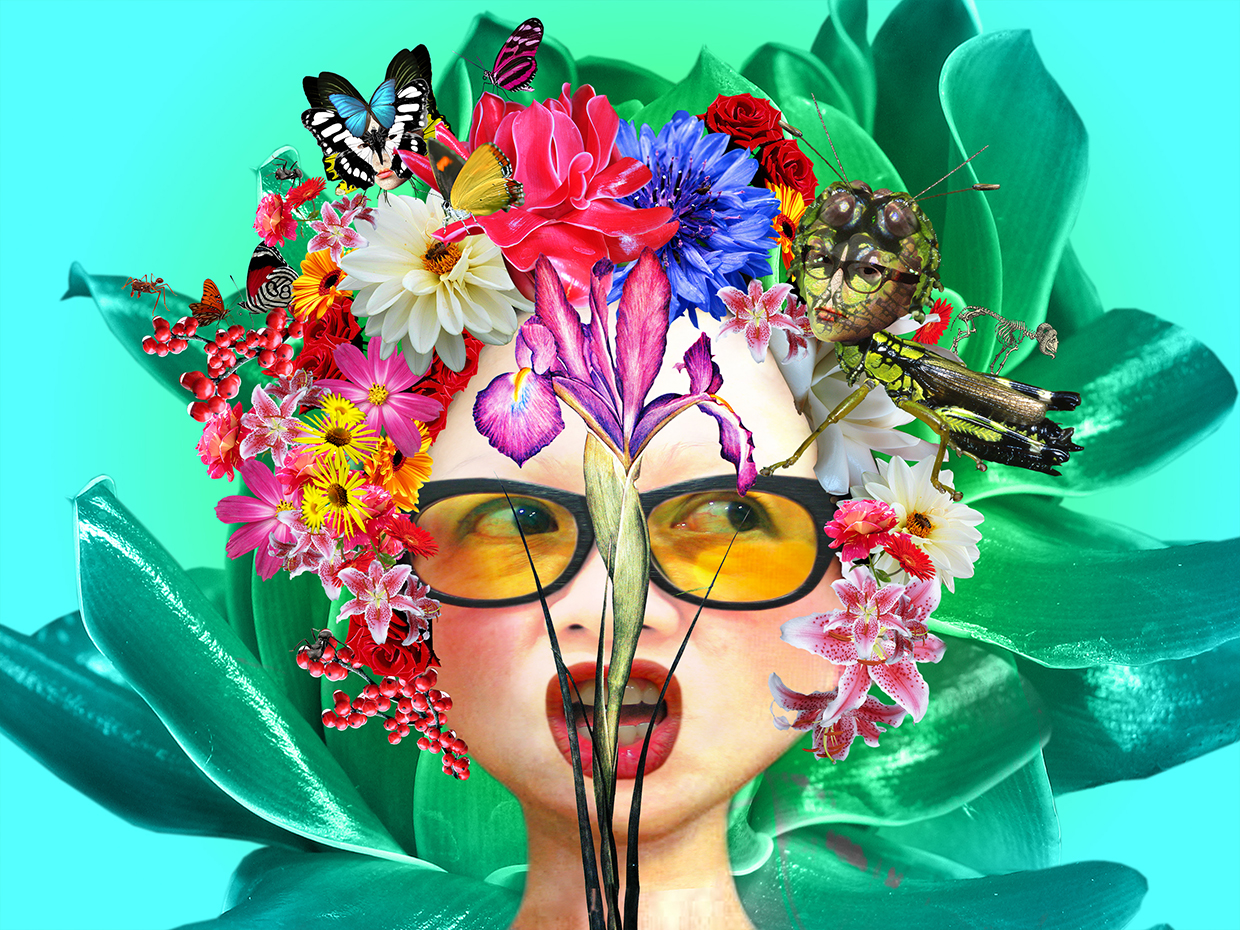
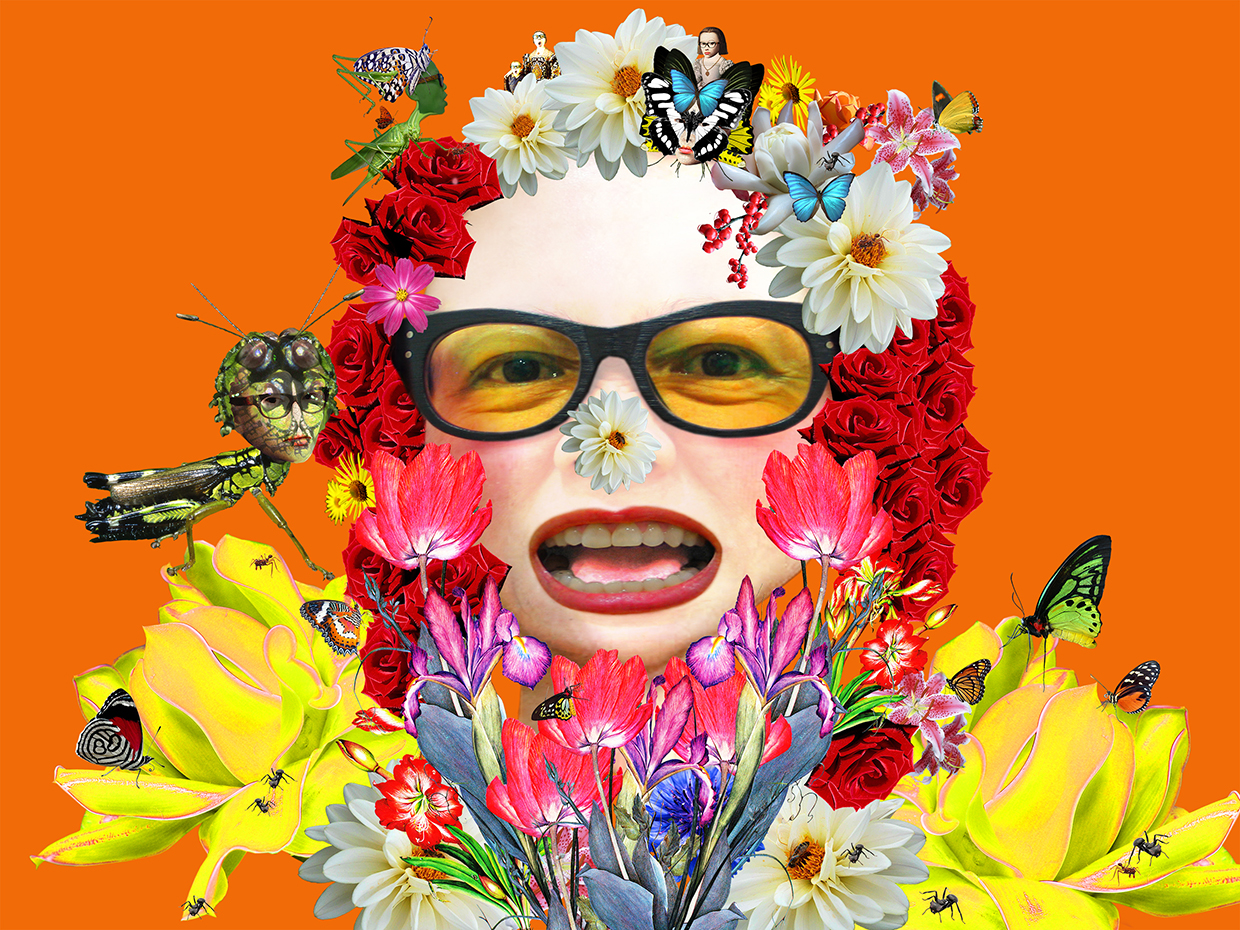
But this doesn’t satisfy Prinda’s sense of color. In her mind, the Garden must already be in full bloom and filled with strange, otherworldly flowers. And I think this is the origin of this collage series of self-portraits, set amidst a surreal flower garden. Sort of like, “OK, my garden doesn’t have flowers, but who has flowers like My Collage Garden?”
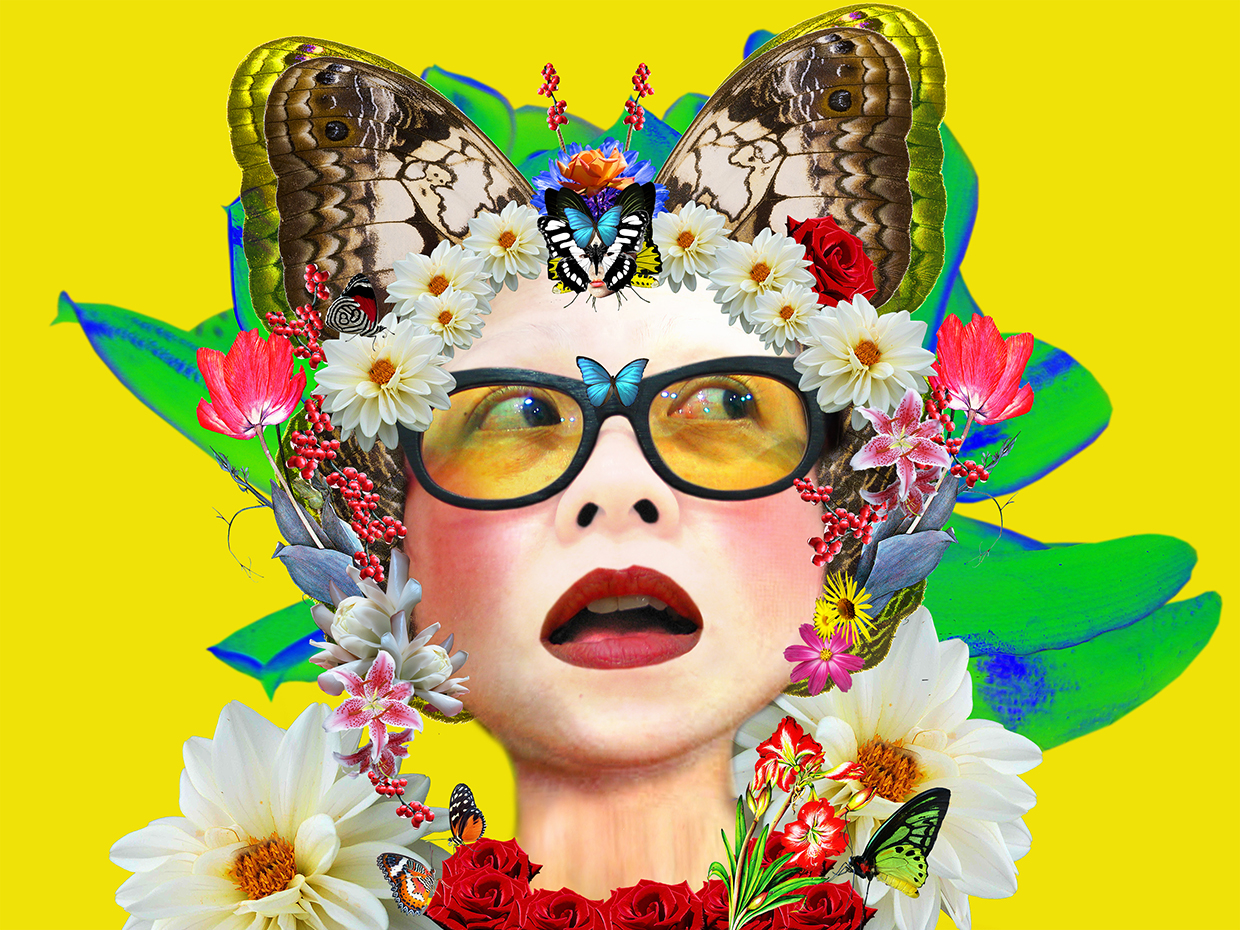
And indeed, nobody ever would. Because in her surreal garden, the sun is always at noon, casting no shadows at all on the flat, solid walls of color—bright yellow, orange, green, blue, and purple. It’s not a big garden, either. In fact, it looks as though it’s only big enough to wrap around you, and anyone who happens to step inside becomes part of the plants too, fortunately or unfortunately. In these collages, Prinda’s surprised expression almost seems to say, “Oh, I’m a plant now!”
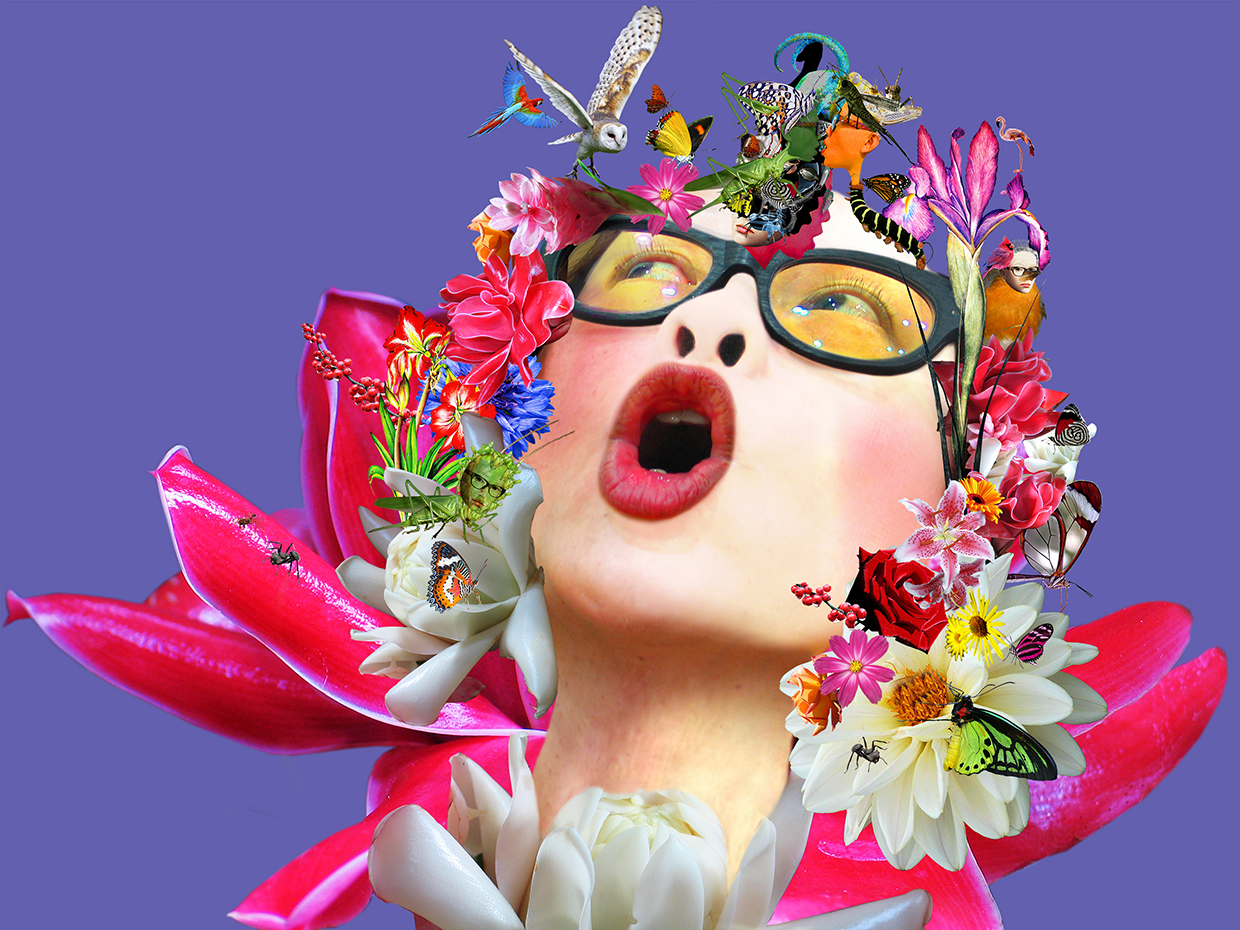
What I like most about the series is the joyous feeling it always evokes in everyone who sees it for the first time. It’s almost as though these primitive, exuberant, colorful flowers reveal the possibility of a brighter world where you are simply happy to be there. Heck! Bright noon sun, gentle winds, pure solid colors, prismatic giant and tiny exotic flora and fauna surrounding you—and you’re a plant now! Why not be happy?